Equity
The Crossover: Outer-Ring Enrollment Surpasses Four Phoenix Districts
Two outer-ring entities now enroll more students than four inner-city Phoenix districts combined, while their demographic profiles differ sharply.
Grand Canyon State Education Coverage, Driven by Data
Education News & Data
Local education reporting from every corner of Arizona, grounded in Arizona Department of Education data.
Amphitheater Unified's chronic absenteeism rate fell from 42.8% to 22.5% across three annual transitions, outpacing Arizona's recovery.
A small Phoenix district cut its chronic absenteeism rate by 39 points in three years, nearly five times the statewide improvement.
Arizona's statewide chronic absenteeism rate improved slightly in 2024-25, but 38 comparable districts posted their highest rates in the four-year district dataset.
Reservation-area districts average 45.7% chronic absenteeism while five suburban East Valley districts average 16.8%. Tuba City's 29-point drop shows the divide is not fixed.
Two outer-ring entities now enroll more students than four inner-city Phoenix districts combined, while their demographic profiles differ sharply.
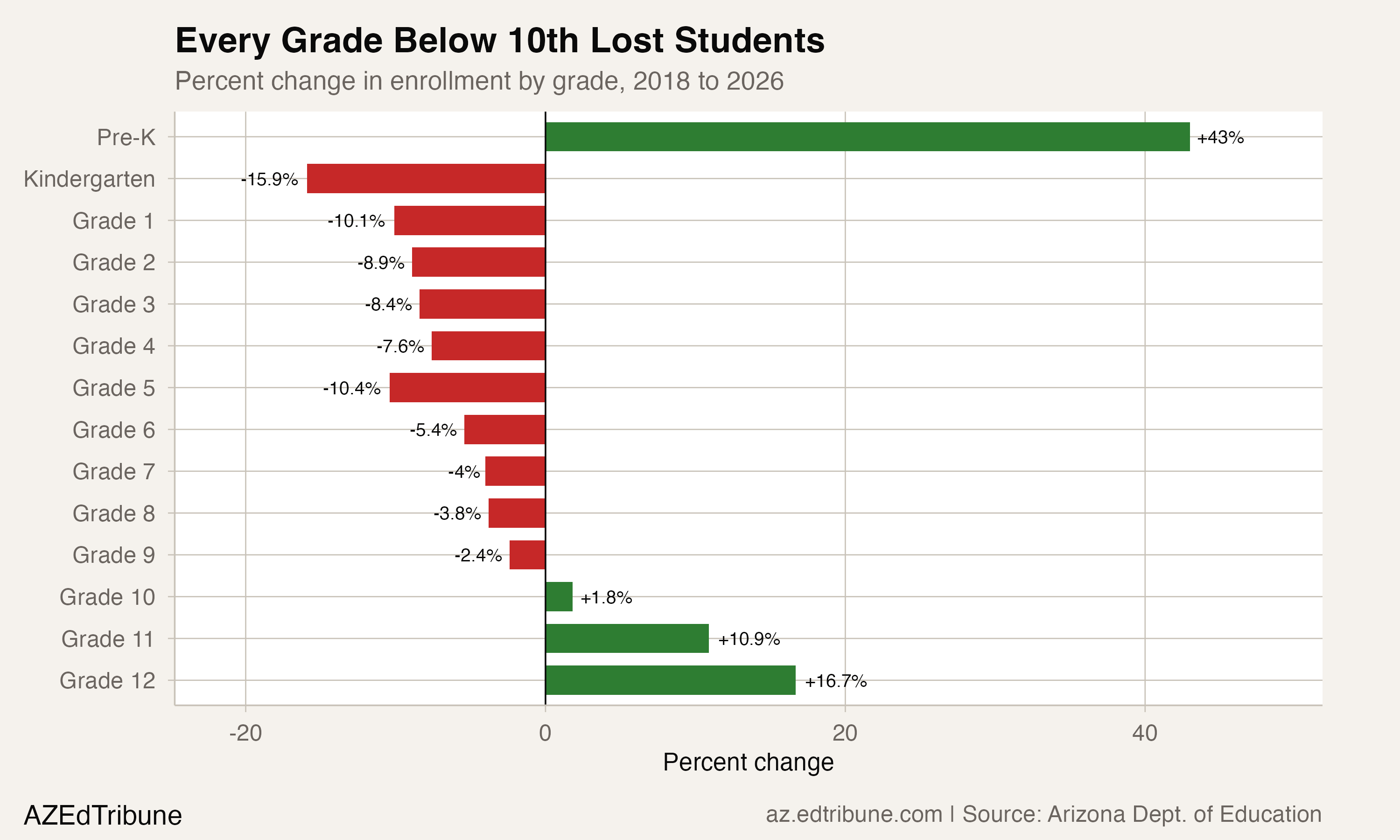
Kindergarten fell 15.9% while 12th grade rose 16.7%. Arizona consistently has more seniors than juniors. Now the shrinking pipeline hits high school.
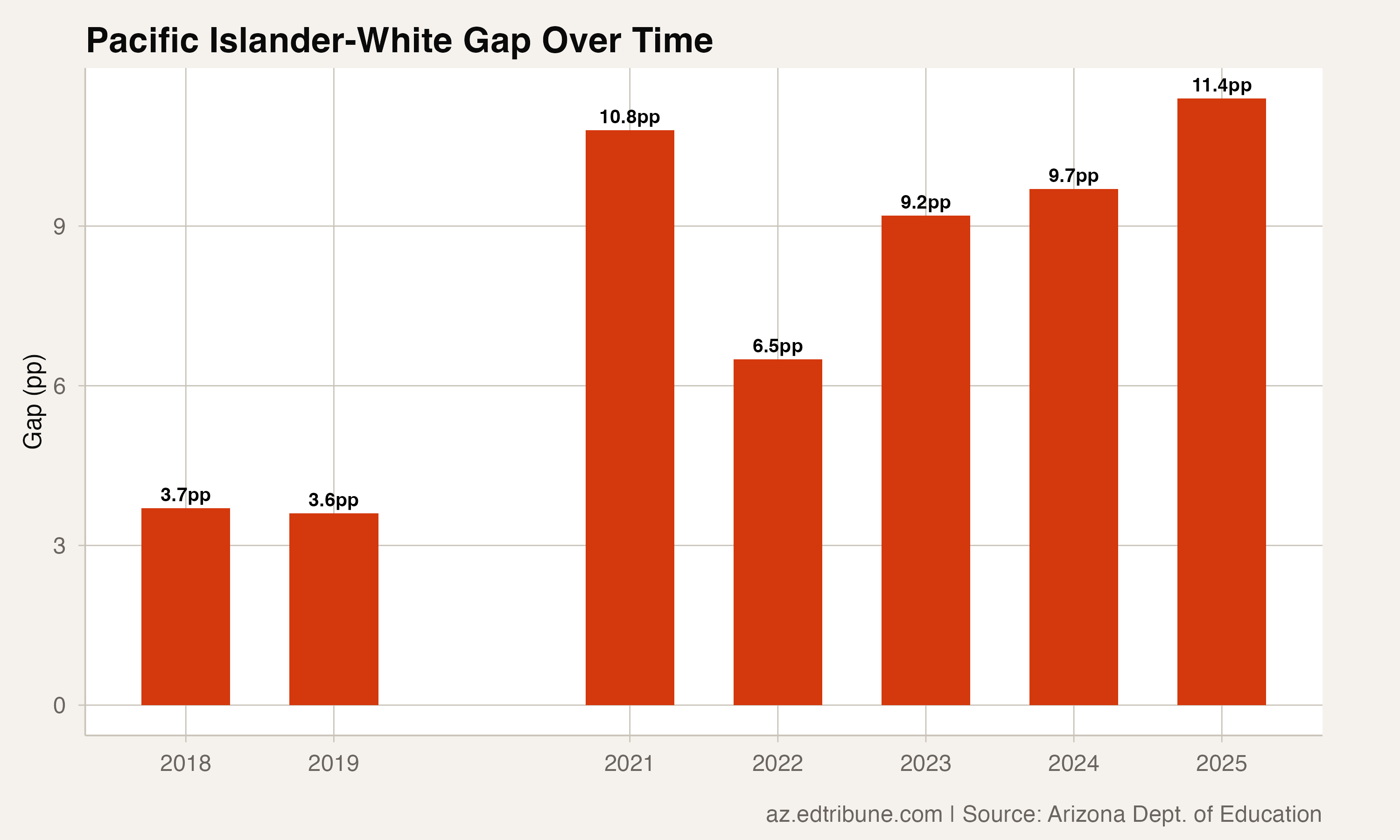
The Pacific Islander-white chronic absence gap tripled from 3.6 to 11.4 points after COVID, the widest relative expansion of any racial group in Arizona.
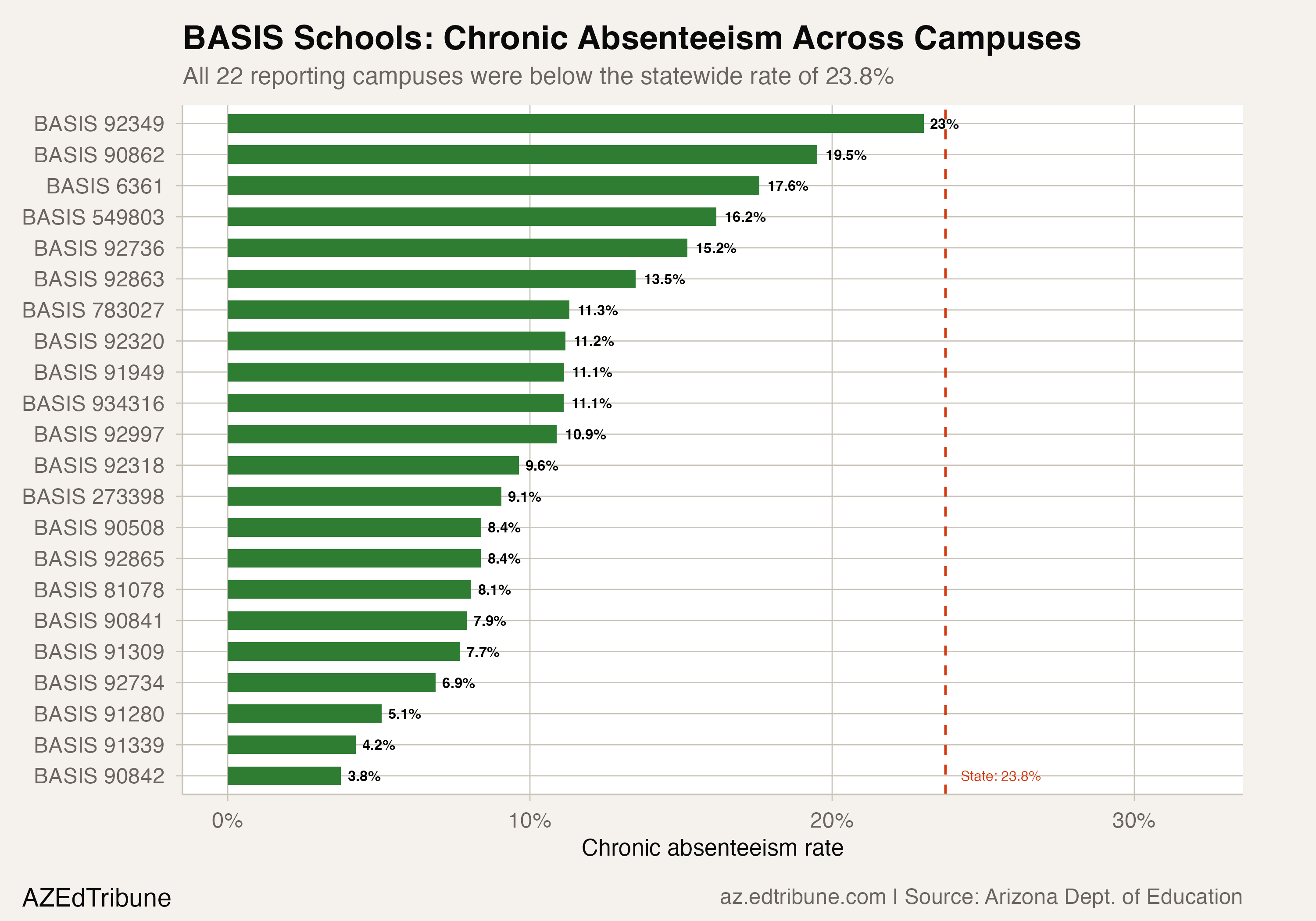
Across 22 campuses, BASIS charter schools averaged 10.9% chronic absenteeism in 2024-25, less than half the state rate. The consistency is hard to dismiss.
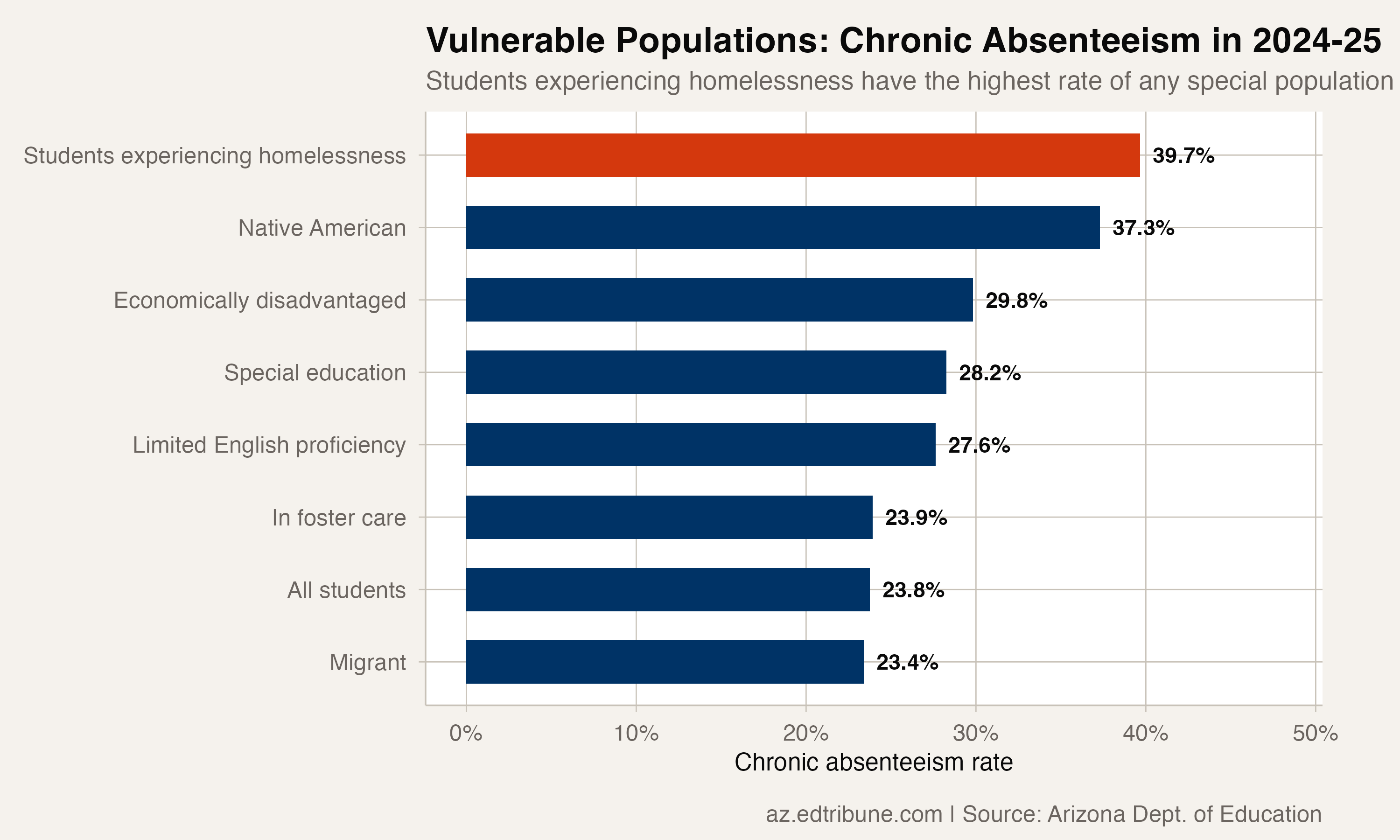
Arizona's students who are currently homeless face a 39.7% chronic absenteeism rate, 10 points above the pre-COVID level. The pandemic permanently elevated their baseline.
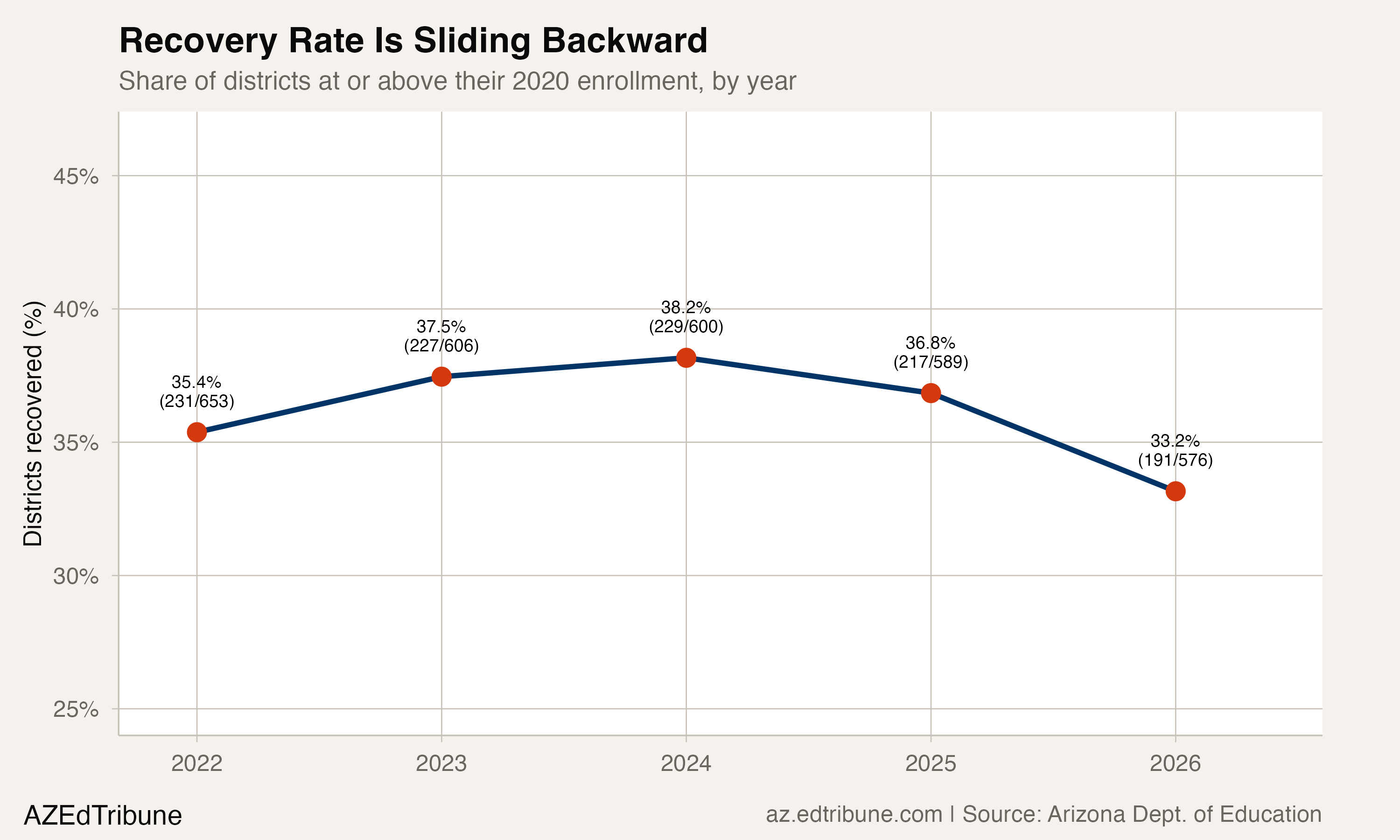
Five years on, only 33% of Arizona districts have regained their 2020 enrollment. The state has lost 72,026 students since its peak, with losses rising.
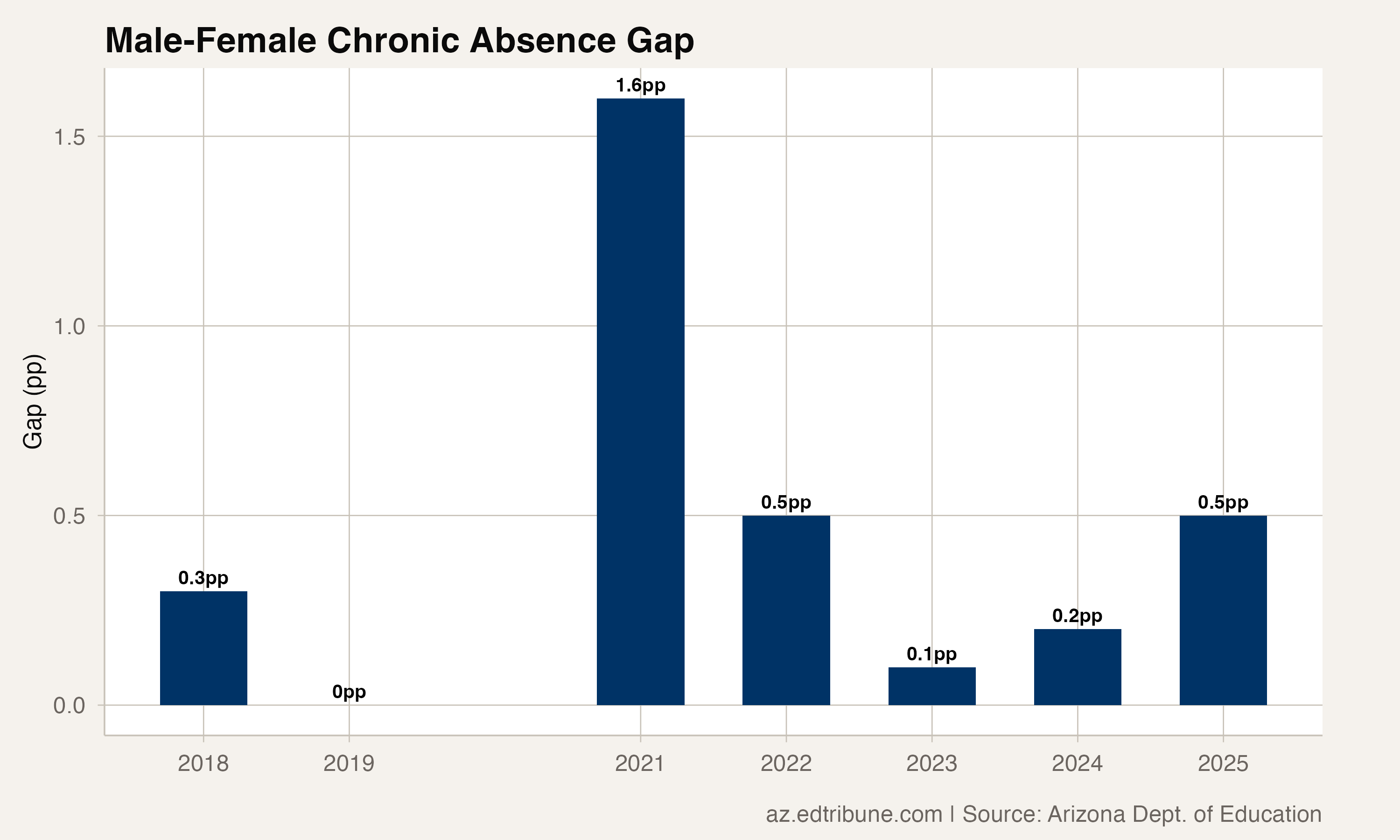
Before COVID, Arizona had no gender gap in chronic absenteeism. By 2024-25, boys were 0.5 points above girls, a small but persistent new pattern.
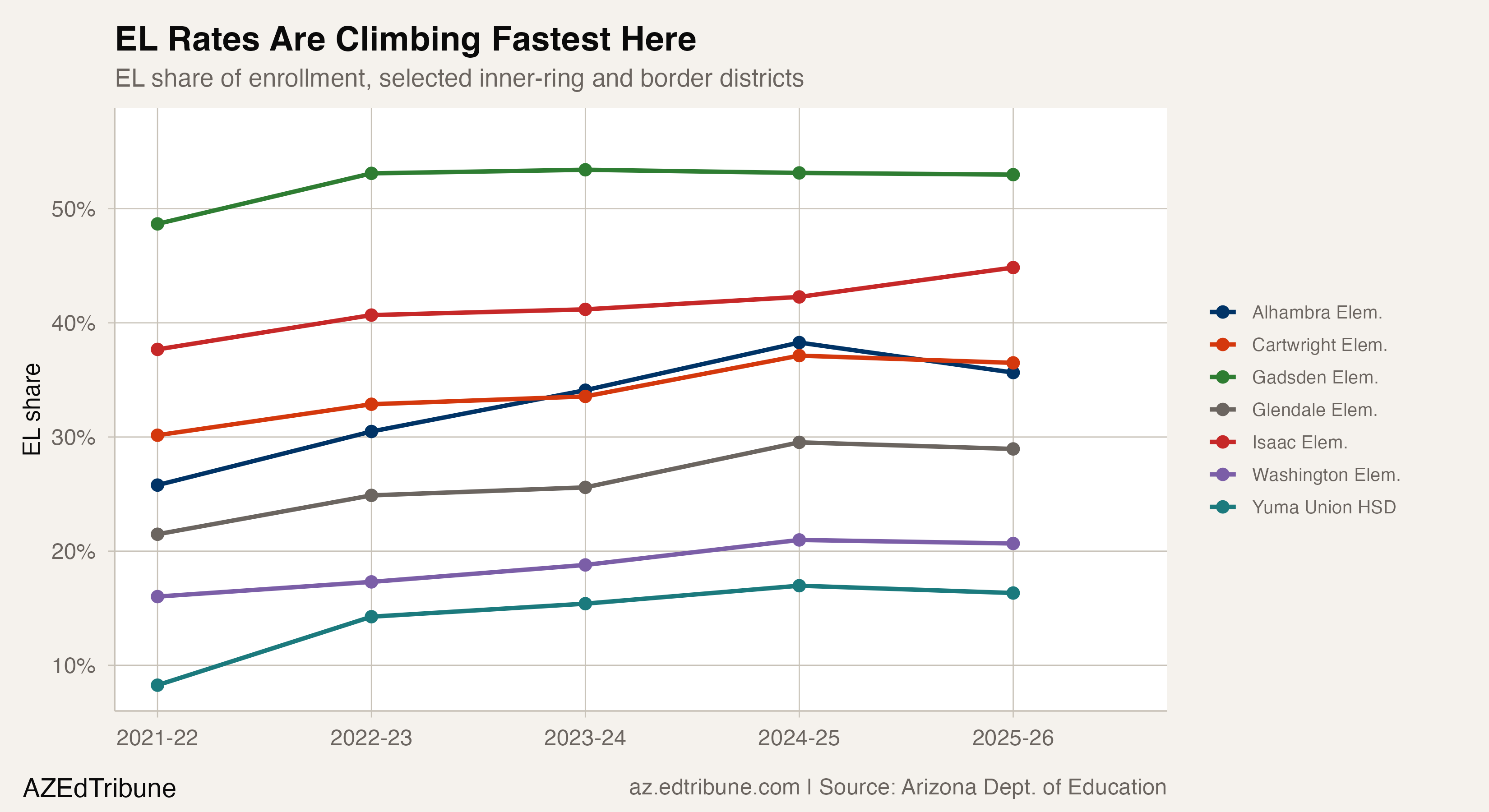
English learner enrollment surged 21% since 2022 even as Arizona lost 59,000 students overall, crossing the 10% threshold for the first time.
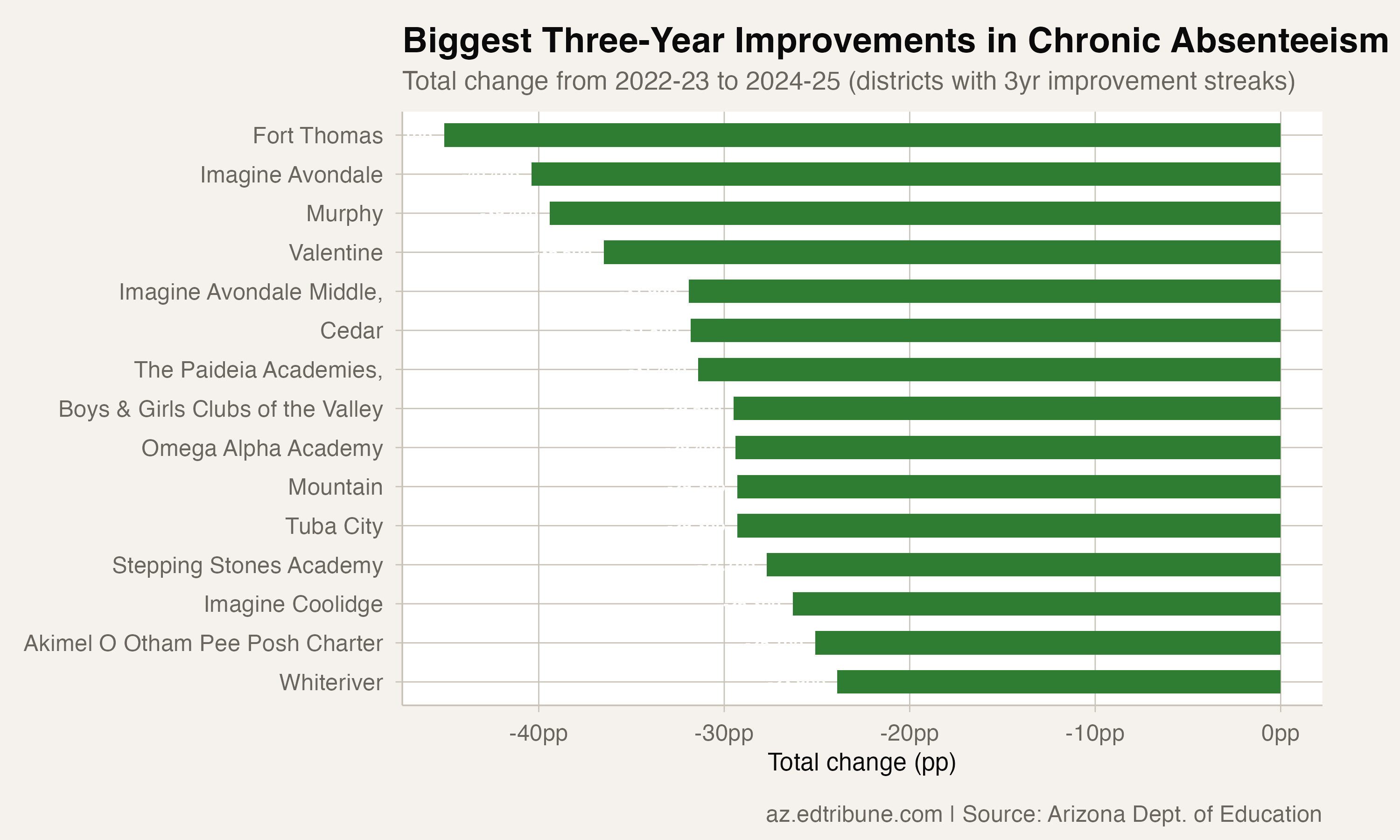
106 Arizona districts improved chronic absenteeism every year from 2023 to 2025. Fort Thomas dropped 45 points; Tuba City cut its rate from 57% to 28%.
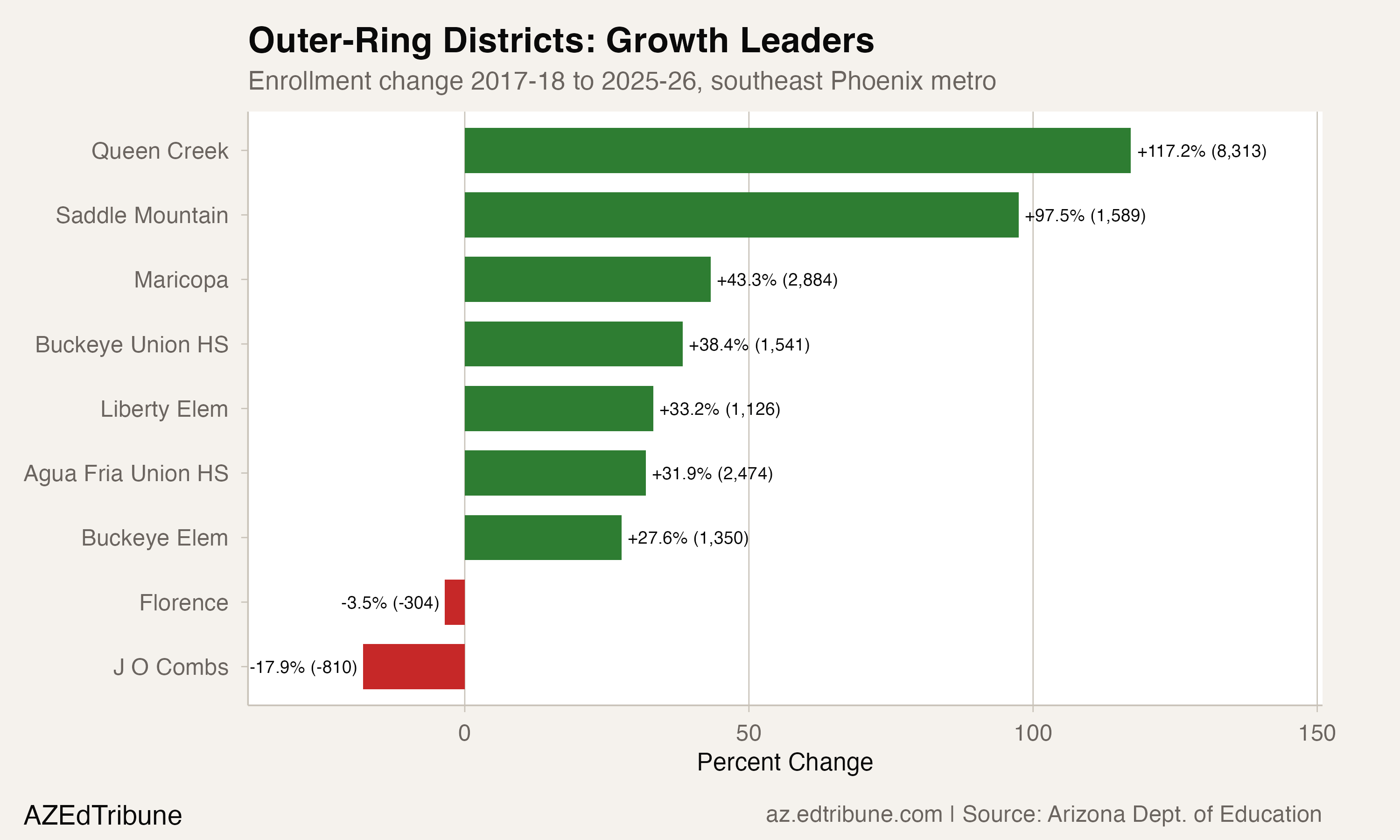
Queen Creek Unified grew 117% since 2018, the fastest traditional district in Arizona. But annual gains have fallen from 2,299 to 374, raising questions about what comes next.
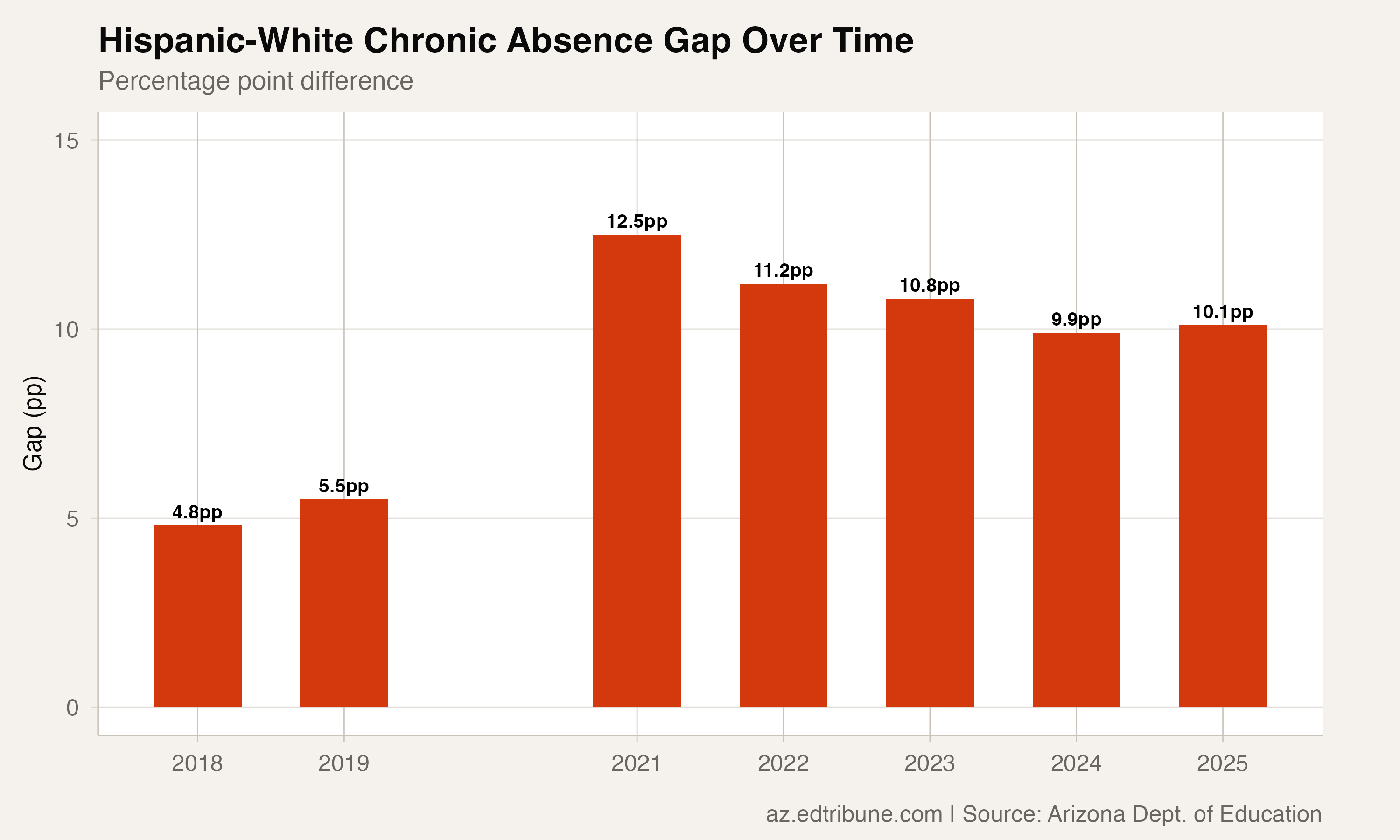
The gap between Hispanic and white chronic absenteeism in Arizona jumped from 5.5 points before COVID to 10.1 points, with no sign of narrowing.