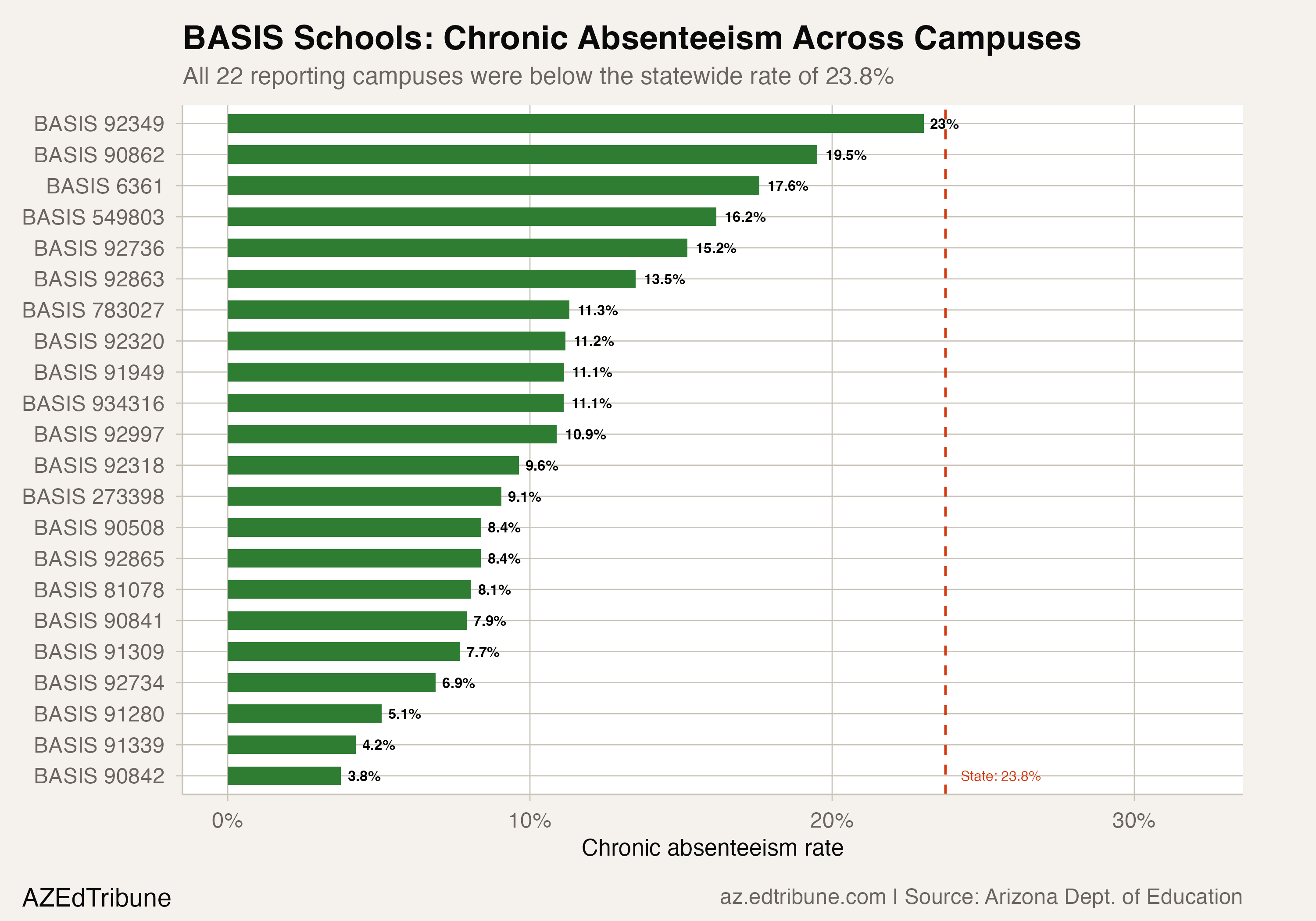
Across 22 campuses reporting data in 2024-25, BASIS Charter Schools posted a mean chronic absenteeism rate of 10.9% and a median of 10.3%. The state average is 23.8%.
The range ran from 3.8% at the lowest campus to 23.0% at the highest. Most campuses clustered between 6% and 14% — a band that would have been considered normal for the overall state before COVID but is now rare.
What the Data Shows
The consistency is the striking thing. This is not a single campus with an outlier year. It is 22 separate schools, and every reporting BASIS campus was below the state average. Even the highest-rate BASIS campus, at 23.0%, was below the statewide rate.
At the low end, two campuses posted rates below 5% — functionally, almost no chronic absenteeism at all. The statewide rate, by contrast, remained close to one in four students.
The Obvious Caveats
BASIS is a charter network, so a direct comparison with comprehensive public districts is limited. Families choose to attend, and the state chronic-absence file does not explain how enrollment patterns, family selection, school culture, or student demographics contribute to the results.
These are not small caveats. They mean the numbers should be read as an outlier signal, not as proof that one model can be dropped into another setting. A district like Tucson Unified, with a 43.6% chronic rate, is operating in a very different context.
Why It Still Matters
But the gap is still large enough to be worth scrutiny. Scottsdale Unified, at 16.5%, and Paradise Valley Unified, at 21.0%, were both below the state average and still ran well above the BASIS average.
The state data does not identify the cause. It does show a network of 22 reporting schools clustered far below Arizona's statewide chronic-absence level.
At a time when the state rate is stuck near 24%, a 22-campus network averaging less than half that rate is not something to wave away with "well, they're selective." The caveats are real. So are the 4% chronic rates. Both things can be true, and the gap between them is where useful questions live.
Detailed code that reproduces the analysis and figures in this article is available exclusively to EdTribune subscribers.
Discussion
Sign in to join the discussion.
Loading comments...