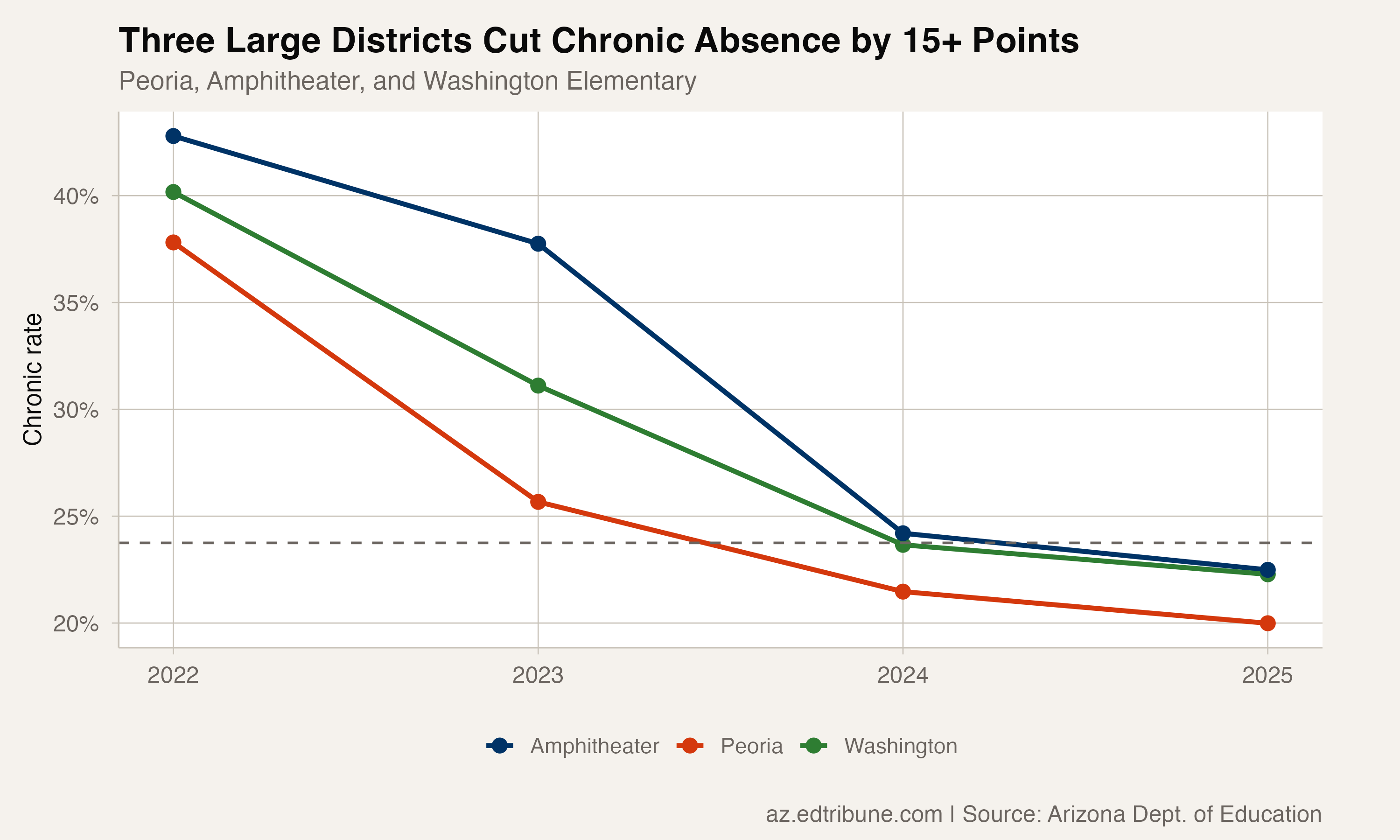
Three large traditional school districts in the Phoenix and Tucson metros have cut chronic absenteeism by more than 15 percentage points since the COVID peak, all while serving diverse, largely working-class student populations.
Amphitheater Unified↗ET, in Tucson's northern suburbs, dropped from 42.8% to 22.5% — a 20.3-point improvement. Washington Elementary↗ET, in central Phoenix, went from 40.2% to 22.3% (-17.9 points). Peoria Unified↗ET, in the northwest Phoenix metro, fell from 37.8% to 20.0% (-17.8 points).
What Makes These Districts Noteworthy
These are not small charter schools or affluent suburban enclaves. Peoria Unified enrolls approximately 35,000 students. Washington Elementary serves roughly 22,000. Amphitheater has about 13,000. They are sizable, traditional public school districts that serve large numbers of students of color and students who are economically disadvantaged.
All three started the recovery period with chronic rates above 37% and are now at or near the state average of 23.8%. That trajectory — cutting the rate nearly in half over three years — shows that large institutional systems can achieve sustained improvement, not just small, agile organizations.
The improvement was also steady, not front-loaded. Unlike some districts that showed large drops in 2023 and then stalled, these three continued improving in both 2024 and 2025, suggesting that whatever changes they made were systemic rather than one-time.
| District | 2021-22 | 2022-23 | 2023-24 | 2024-25 | Total Change |
|---|---|---|---|---|---|
| Amphitheater | 42.8% | 37.8% | 24.2% | 22.5% | -20.3pp |
| Washington Elem. | 40.2% | 31.1% | 23.7% | 22.3% | -17.9pp |
| Peoria | 37.8% | 25.7% | 21.5% | 20.0% | -17.8pp |
The Contrast
The recovery of these districts stands in sharp contrast to Tucson Unified, which sits just south of Amphitheater and spiked from 33.8% to 43.6% in 2025. Amphitheater and Tucson Unified serve overlapping parts of the Tucson metro, face similar regional economic conditions, and draw from comparable demographic pools. Yet Amphitheater continued improving while Tucson Unified reversed.
The Phoenix comparison is equally striking. Washington Elementary's 22.3% rate represents a district in central Phoenix — not a suburb. It serves a lower-income, more diverse student population than many of the East Valley districts that get attention for low absence rates. Yet its rate is now within six points of Scottsdale Unified's 16.5%.
What This Suggests
The data cannot explain why these three districts succeeded while others stalled or reversed. That would require investigating their specific interventions — attendance tracking systems, family outreach practices, community partnerships, transportation initiatives, and how they allocated the federal pandemic recovery funds.
What the data does establish is that recovery at scale is achievable. Districts serving 13,000 to 35,000 students, in urban and suburban settings, with significant poverty and diversity, can cut chronic absenteeism by 15 to 20 points over three years. The statewide stall — just 0.6 points of improvement in 2025 — is not inevitable.
Detailed code that reproduces the analysis and figures in this article is available exclusively to EdTribune subscribers.
Discussion
Sign in to join the discussion.
Loading comments...